


Most people think construction starts when the first wall goes up. It doesn't. Before any structure gets built, before foundations get poured, before a single material gets ordered, the ground itself has to be prepared, and that preparation is what commercial excavation is. Get it right and everything that comes after it has a solid base to work from. Get it wrong and the problems don't show up immediately, they show up six months into construction when fixing them costs three times what it would have cost to do it correctly the first time.
In Los Angeles, commercial excavation carries its own set of challenges that other cities don't have in the same combination. Seismic activity, expansive clay soils, proximity to utilities, and a permit process that touches multiple agencies before a single shovel hits the ground. For developers and business owners doing their first commercial project in LA, understanding what excavation actually involves and what it costs when it goes wrong is what separates a project that stays on track from one that doesn't.
What is Commercial Excavation?
Commercial excavation is the process of removing soil, rock, and other materials from a site to prepare it for construction. It's not just digging a hole, it covers everything from clearing the surface of a site and grading the land to excavating for foundations, basements, underground utilities, and drainage systems. Every commercial construction project that breaks ground starts with some form of excavation, and the scope of that work depends entirely on what's being built, what the site conditions are, and what's already underground.
What separates commercial excavation from residential excavation is the scale and the complexity. A commercial site is larger, the loads the structure will carry are heavier, the foundation requirements are more demanding, and the number of underground systems, electrical, plumbing, drainage, that have to be coordinated before the ground closes back up is significantly more involved. In LA specifically, older commercial sites often have existing underground infrastructure from previous buildings that has to be identified, managed, or removed before new work can begin.
Types of Commercial Excavation Services
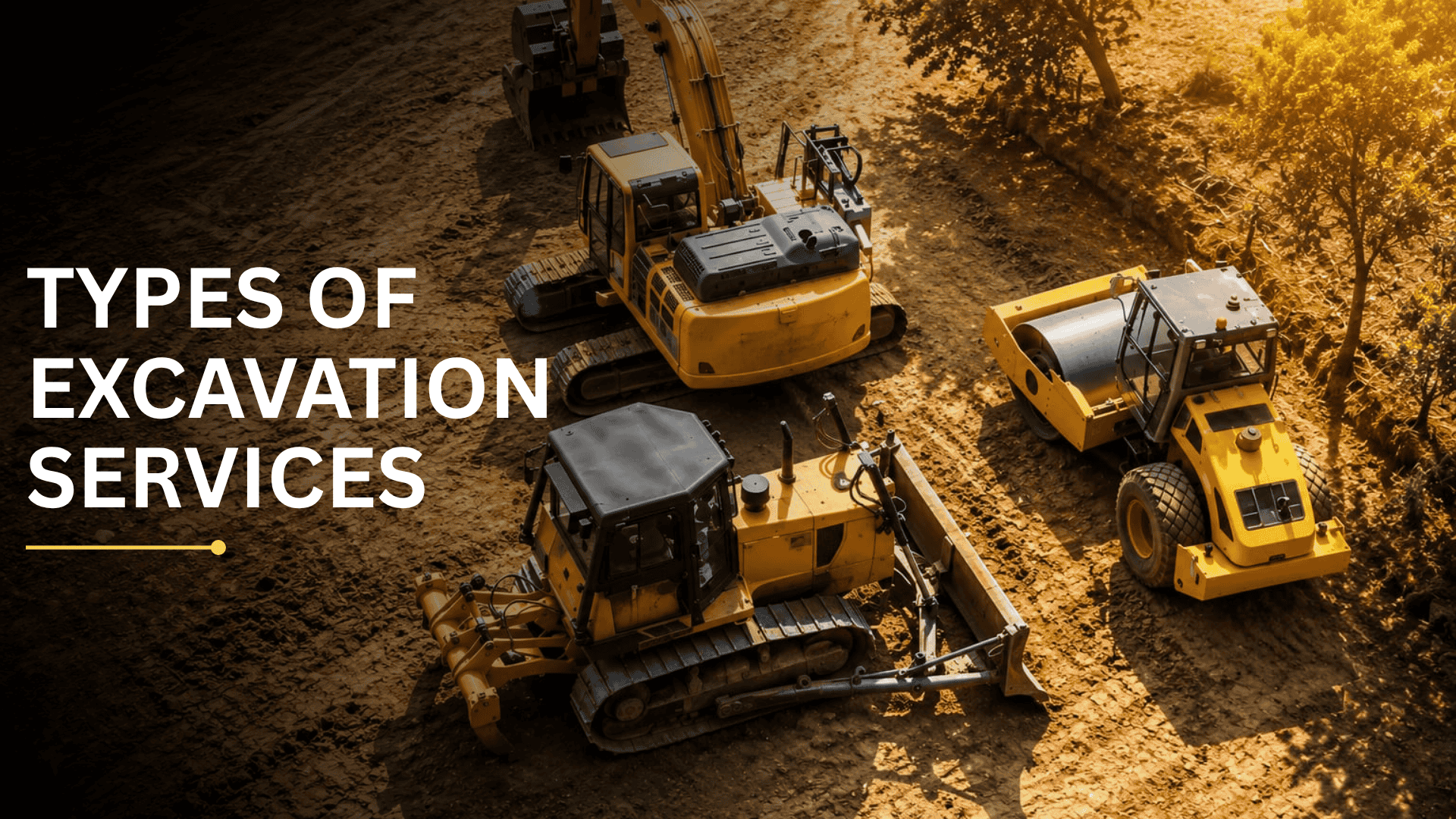
Understanding the different types of excavation work helps clarify what a project actually needs before construction begins, and why the scope of excavation work isn't always obvious from looking at a site.
- Site clearing and grubbing - This is the first step on most commercial sites, removing vegetation, debris, existing structures, and the top layer of organic soil to get down to stable ground. In LA, older commercial lots often have existing concrete slabs, underground footings from previous buildings, and utility connections that have to be dealt with before any new work starts.
- Rough grading - Once the site is cleared, the land gets shaped to match the engineering drawings. This means moving large volumes of soil to establish the right elevations across the site, managing drainage, and making sure the ground is stable and level enough for the foundation work that follows.
- Foundation excavation - This is where the ground gets cut to the depth and dimensions the structural engineer has specified for the building's foundation. The depth, the width, and the method all depend on soil conditions, the load the building will carry, and what the geotechnical report says about what's underneath.
- Utility trenching - Before the foundation goes in, trenches get cut for underground utilities, water, sewer, electrical, gas, and communications. In a commercial project these systems are more complex than residential, and coordinating the sequencing of this work with the foundation work is where a lot of projects run into scheduling problems if it isn't planned properly.
- Shoring and retention - On sites with limited space, which is most commercial sites in LA, the excavation has to go deep without destabilizing the surrounding ground or adjacent structures. Shoring systems hold the excavation walls in place while foundation work happens below grade. Getting this wrong on a dense urban site in LA isn't just a construction problem, it's a liability problem.
Why Commercial Excavation Matters for Your Project
Excavation is the part of a construction project that most clients pay the least attention to because it happens before anything visible goes up. That's exactly why it tends to be where the most expensive surprises come from.
- Stronger foundations - The foundation sits on what excavation leaves behind. If the soil isn't properly compacted, if the excavation wasn't taken to the right depth, or if underground conditions weren't properly accounted for, the foundation gets compromised before the building is even framed. Fixing a foundation problem after the fact is one of the most expensive corrections in construction, and it almost always traces back to something that wasn't caught or wasn't done correctly during excavation.
- Underground assessment - Los Angeles has been built, demolished, and rebuilt on the same land for over a century, and older commercial sites carry the evidence of that. Abandoned utilities, old foundations, contaminated soil, and in some cases archaeological finds, all of which have to be dealt with before construction can continue. None of these show up on a survey. They show up when the excavation is already underway, which is why having a contractor who knows how to handle them without derailing the schedule matters more than most people expect going in.
- Proper drainage management - Excavation establishes how water moves on and around a site, and in LA where heavy rainfall hits a largely impermeable urban landscape, getting drainage wrong during excavation creates problems that take years to show up and are expensive to fix once the building is occupied. Proper grading and drainage planning has to happen at the excavation stage, not after the foundation is in.
To know more about Ground-up construction in LA, click here.
The Commercial Excavation Process in Los Angeles
Excavation in LA doesn't work the same way it does in other cities, and the differences aren't minor. Seismic requirements, specific soil conditions, dense urban sites, and a permit process that moves through multiple agencies all stack on top of each other in a way that most other markets don't have to deal with, and the projects that run into serious trouble here are almost always the ones that treated one of these as optional.
- Geotechnical investigation - A geotechnical report isn't something you do to satisfy a permit requirement, it's the document that tells everyone on the project what they're actually dealing with before a single piece of equipment gets on site. Test borings go into the ground to understand soil conditions at depth, groundwater levels, and seismic risk at that specific location, and both the structural engineer and the excavation contractor use what comes back to plan their work. Skip it or rush it and you find out mid-excavation, which is the most expensive possible time to find out.
- Permits and plan check through LADBS - Grading permits are required for commercial excavation in LA, and the plan check on larger projects goes through grading plans, shoring design, and drainage calculations before anything starts. The part people don't anticipate is what happens when the scope changes after permits are already issued, because that change doesn't just get noted, it can send the project back through review and add weeks to a schedule that already had no slack in it.
- Soil conditions - Los Angeles soils are not consistent across the city and the difference matters. In some areas expansive clay swells when it gets wet and contracts when it dries out, and a foundation sitting on that movement without accounting for it will show the effects years down the line. Older sites often have fill soils that have to come out entirely before new work goes in. And depending on where in the city the project sits, proximity to fault lines can change both the required excavation depth and how the foundation gets engineered around it.
- Utility coordination - This is the one that stops projects cold when it goes wrong. Decades of utility infrastructure run under LA's commercial corridors, and before any ground gets broken on an urban site the work has to be coordinated with LADBS, the utility companies, and Dig Alert. An unmarked utility line that gets hit mid-excavation doesn't create a cost problem, it creates a full stop while the damage gets assessed and repaired, and everything on the schedule behind it moves with it.
What to Look for in a Commercial General Contractor for Excavation
Excavation on a commercial project in LA isn't something to hand off to the lowest bidder and check back in on when it's done. It's the foundation of everything that follows, and the contractor managing it needs to understand not just how to move earth but how the excavation work connects to every phase of construction that comes after it.
- Experience with LA's specific conditions - Seismic requirements, expansive soils, dense urban sites, LADBS permits, utility coordination— these are LA-specific challenges that a contractor with experience only in other markets won't be prepared for. Ask specifically about commercial projects completed in LA, not just their general portfolio.
- In-house coordination between excavation and construction - The cleanest excavation projects are the ones where the team doing the excavation is working directly with the team doing the foundation and structural work, not handing off to a separate contractor who has to figure out what was left for them. When excavation and construction are managed under one roof, sequencing problems get caught before they affect the schedule.
- Clear process for handling unexpected site conditions - Every experienced commercial contractor in LA has hit something unexpected mid-excavation. What matters is how they handle it, whether they have a clear process for assessing the situation, communicating with the owner, and adjusting the plan without letting it derail the project. Ask specifically how they've handled underground surprises on previous projects.
Build Solutions has been operating as a commercial general contractor in Los Angeles for 25 years, managing ground-up construction projects that include site clearing, excavation, foundation work, and everything that follows through to final inspection. If you're planning a commercial project in LA and want to understand what the excavation and ground-up process actually looks like, that's exactly the conversation we're set up to have.
Want to know more before hiring a contractor? Read this.
If You're Planning a Commercial Project in LA
Commercial excavation is where your project either gets set up for success or starts accumulating problems that won't surface until construction is already underway. The permits, the soil conditions, the utility coordination, and the sequencing of work all have to be right before anything goes vertical, and in Los Angeles that process is more involved than most first-time developers and business owners expect.
Build Solutions is a woman-owned commercial general contractor based in Los Angeles with 25 years of experience managing ground-up construction projects across LA County. We handle everything from initial site preparation and excavation through to final inspection, under one contract, with one team accountable for the outcome.
If you're in the planning stage of a commercial project in LA, we're happy to walk you through what the process actually looks like from the ground up.
FAQs
1. What is commercial excavation?
Commercial excavation is the process of removing soil, rock, and existing materials from a site to prepare it for construction, covering everything from surface clearing and grading to foundation excavation, utility trenching, and drainage preparation. It's the first phase of any ground-up commercial construction project and directly affects everything that gets built on top of it.
2. How long does commercial excavation take in LA?
It depends on the size of the site, the soil conditions, and how complex the underground coordination is, but most commercial excavation in LA runs anywhere from a few weeks to a couple of months before foundation work can begin. Projects that hit unexpected underground conditions or require additional permit review can run longer, which is why having a geotechnical report and a realistic schedule from the start matters.
3. Do I need permits for commercial excavation in LA?
Yes, commercial excavation in Los Angeles requires grading permits through LADBS, and on larger projects the plan check process reviews grading plans, shoring designs, and drainage calculations before work can begin. Changes to the excavation scope after permits are issued can trigger additional review, so getting the scope right before permits are submitted saves significant time.
4. What are the most common problems in commercial excavation?
Underground surprises are the most common, abandoned utilities, old foundations, and unstable fill soils that don't show up on a surface survey. Poor drainage planning and inadequate shoring on tight urban sites are the next most frequent issues. Most of these are manageable if the contractor has experience with LA's specific conditions and a clear process for handling unexpected site conditions.
5. Why does commercial excavation cost vary so much?
Because what's underground is unknown until the work starts, and soil conditions, existing infrastructure, and site constraints all affect how much work is actually involved. Projects with a detailed geotechnical report going in tend to have more predictable excavation costs because the unknowns get reduced before the work begins rather than discovered mid-project.
Related News


.svg)